Candle Placement Explained: Where to Put Candles for Warmth and Balance
Candles do quiet work in a room. They add light at eye level, warm up corners that lamps never reach, and give a surface a focal point without asking for wall space. Drop one anywhere and it looks pleasant enough. Place it well and the whole room settles. The difference is rarely the candle itself — it is the height, the grouping, and how close it sits to everything around it.
Height: the Difference Between Decor and Clutter
A candle that sits too low disappears into the furniture. One that sits too high blocks the view across the room. The useful range depends on the surface.
On a coffee table, keep candles under roughly eight inches tall. Anything taller interrupts the sightline between the sofa and whatever is across the room, and you will feel it every time you sit down, even if you never consciously notice why. If you want the drama of a tall pillar, move it to a console, a mantel, or a shelf where nothing needs to be seen through it.
On a dining table, work backward from seated eye level. Tapers look elegant at either end of a long table, where they frame the setting rather than sit in the middle of it. On a narrow table, tall tapers in the center become a fence between you and your dinner guest. Use low pillars or a shallow bowl of candles instead, and keep the tallest flames at the edges.
On a mantel or entry console, go bigger. Ten to fourteen inches reads as intentional at that height. A small votive up there tends to look lost, like it was left behind.
Grouping: How to Build a Cluster That Looks Intentional
Single candles are fine, but they usually read as lonely. Two candles of the same height read as a pair of salt and pepper shakers. Three, with variation, read as a composition.
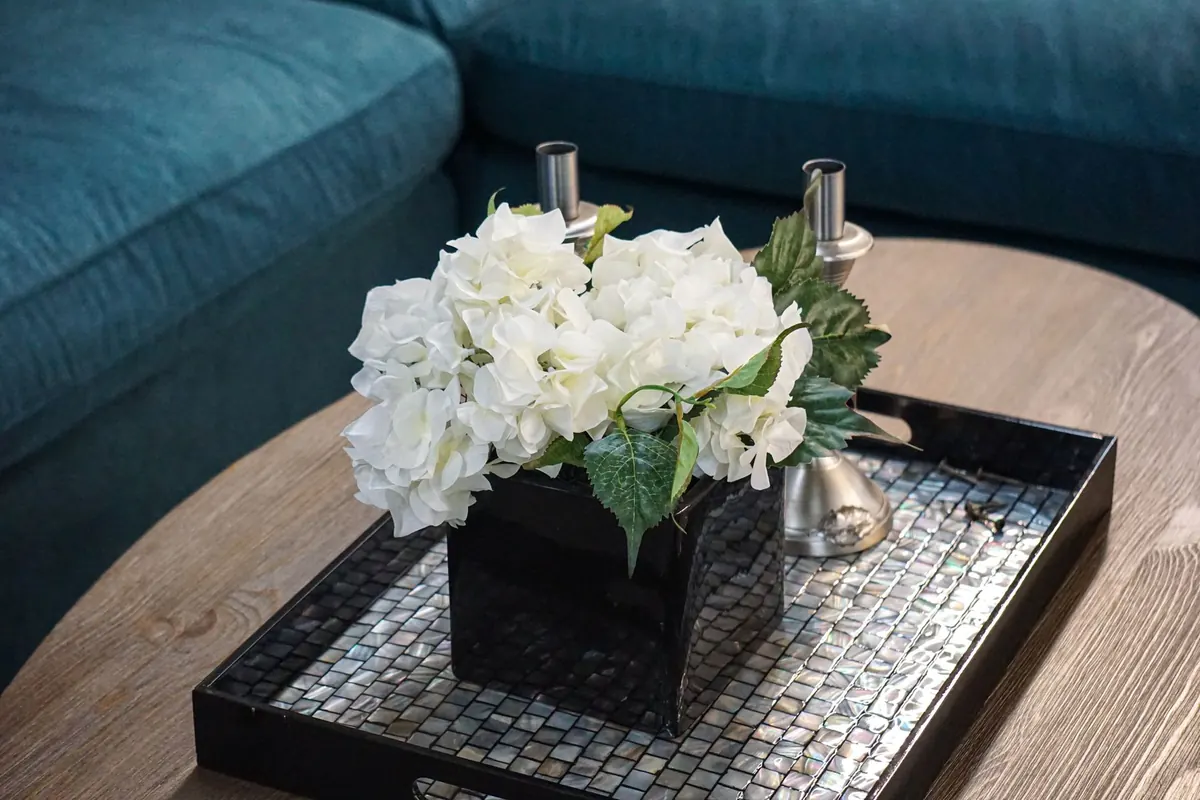
The simplest rule that works: vary the heights, repeat the finish, and give them a shared base. A tray, a stack of two books, a slate tile, or a shallow bowl all do the job. The base is what turns three separate objects into one arrangement you can move when you dust.
- The trio: three candles of different heights, spaced about two inches apart, arranged in a loose triangle rather than a straight line.
- The staircase: four or five candles stepping up in height along a shelf or console, like a small skyline.
- The pair: two matching tapers in holders of different heights, flanking a bowl, a stack of books, or a vase.
Keep flames at least three inches apart when you light them. Closer than that and the heat melts the neighbors unevenly, which wastes wax and shortens the burn. It also looks crowded, as though the candles are competing for the same pocket of air.
Safety Rules That Don't Ruin the Look
Most candle accidents are placement accidents. A flame that is fine in the middle of a table becomes a problem when a curtain moves or a sleeve passes over it.
- Trim wicks to about a quarter inch before each burn. Long wicks smoke, flicker, and burn fast.
- Keep candles clear of curtains, loose fabric, paper, dried flowers, and anything hanging directly above the flame. Heat rises.
- Keep them out of drafts from windows, doors, and air vents. A draft pushes the flame sideways and leads to uneven melting and soot on the wall.
- Use a holder that catches drips, and make sure the candle is stable. Wobbly holders on uneven shelves are a real hazard.
- Never leave a burning candle unattended, and always extinguish them before bed. A snuffer avoids the spatter you get from blowing.
- Keep matches and lighters, plus all candles, out of reach of children and pets. Cats in particular treat a warm shelf as a resting spot.
If you have a fireplace, a woodstove, or a home with a lot of fabric — curtains, rugs, upholstered everything — be extra deliberate about clearance. And if you are placing candles somewhere unusual, such as a bathroom shelf or a stair landing, check the surface is heat-safe and flat before you commit.
Room-by-Room Placement
Living room
Anchor the coffee table with one wide three-wick candle or a trio on a tray, centered or slightly off-center toward the seating. Beside a sofa, put a candle on the side table with the lamp, just a little shorter than the lamp base so the two read as a set. On the mantel, place holders slightly forward of the wall and never directly beneath hanging art.
Dining room
Choose unscented candles here. Scent competes with food, and even a lovely one becomes strange over roast chicken. Low and wide in the middle, tall and narrow at the ends.
Bedroom
One candle on the nightstand, next to a book and a small dish, is plenty. On a dresser, a trio at staggered heights on a tray looks considered. Keep candles away from bedding, curtains, and anywhere fabric drapes over an edge. A soft, single-note scent suits a sleeping space better than a strong blend.
Bathroom and entryway
In the bathroom, set candles on a deep ledge or corner shelf, away from towel hooks and shower splash. In the entry, group two or three inside a lantern or on a tray at the end of a console. Keep them out of the path where people set down bags and keys — nobody should have to reach across a flame.
Matching the Candle to the Spot
Proportion matters more than any fixed formula. A thick pillar on a narrow windowsill looks cramped; a slim taper on a deep console looks thin. As a rough guide, the candle should be about a third of the height of the largest object it sits beside, unless you want it to be the focal point.
Scent deserves the same restraint. One fragrance per open space is usually enough — in an open-plan room, keep scented candles near the edges, where they won't compete with the kitchen. Unscented pillars and tapers give you all the visual warmth with none of the layering problem.
A Five-Minute Placement Check
Stand in the doorway and squint until the details blur. Whatever still draws your eye is your focal point, and your candles should either support it or become it — not fight it.
Then check three things. Does each candle have something next to it, such as a book, a bowl, or a small plant, so it reads as part of a scene rather than a leftover? Is there clear air above every flame? And which candles are actually for burning, versus which are there purely for looks? Knowing the difference makes it easy to keep the display styled while leaving the safety-critical ones in plain sight.
Photo: 661512 / Pixabay